
Sometimes the insurance company does more than offer too little. It says the crash was your fault. It says its driver did nothing wrong and you are not entitled to anything. In some of those cases, another law firm has already told you the same thing.
This chapter covers how a disputed-fault claim works, and two cases that turned around.
This was referred to us by another law firm who was going to turn the case down. So we literally took this from somebody being blamed for a crash to turning it around, to show the truth that they were not at fault for the crash, and they received the justice that they deserved.
A case just outside Gainesville
The at-fault party was denying liability. They said our client was at fault, and they said they had witnesses to prove it. We knew our client was not at fault. She told us how it happened, and we believed her.
We argued with the insurance company, filed a lawsuit, and took the case through litigation. Just before trial, the insurance company went from denying liability and offering nothing to settling for just under a million dollars. Our client had significant neck and back injuries and had surgery.
How you flip a denied-liability case
It is not easy. You take the statements of the parties, and in this case we took the deposition of the driver of the other car. We had some limited video footage.
The opposing party kept saying it had an independent witness who would support its client's side. Every time we tried to get that witness's deposition, the witness never showed up. Without that testimony, it came down to our client's word against theirs. And her word was much more favorable, when you looked at the points of impact on the vehicles and where the crash happened.
A case at a gas station
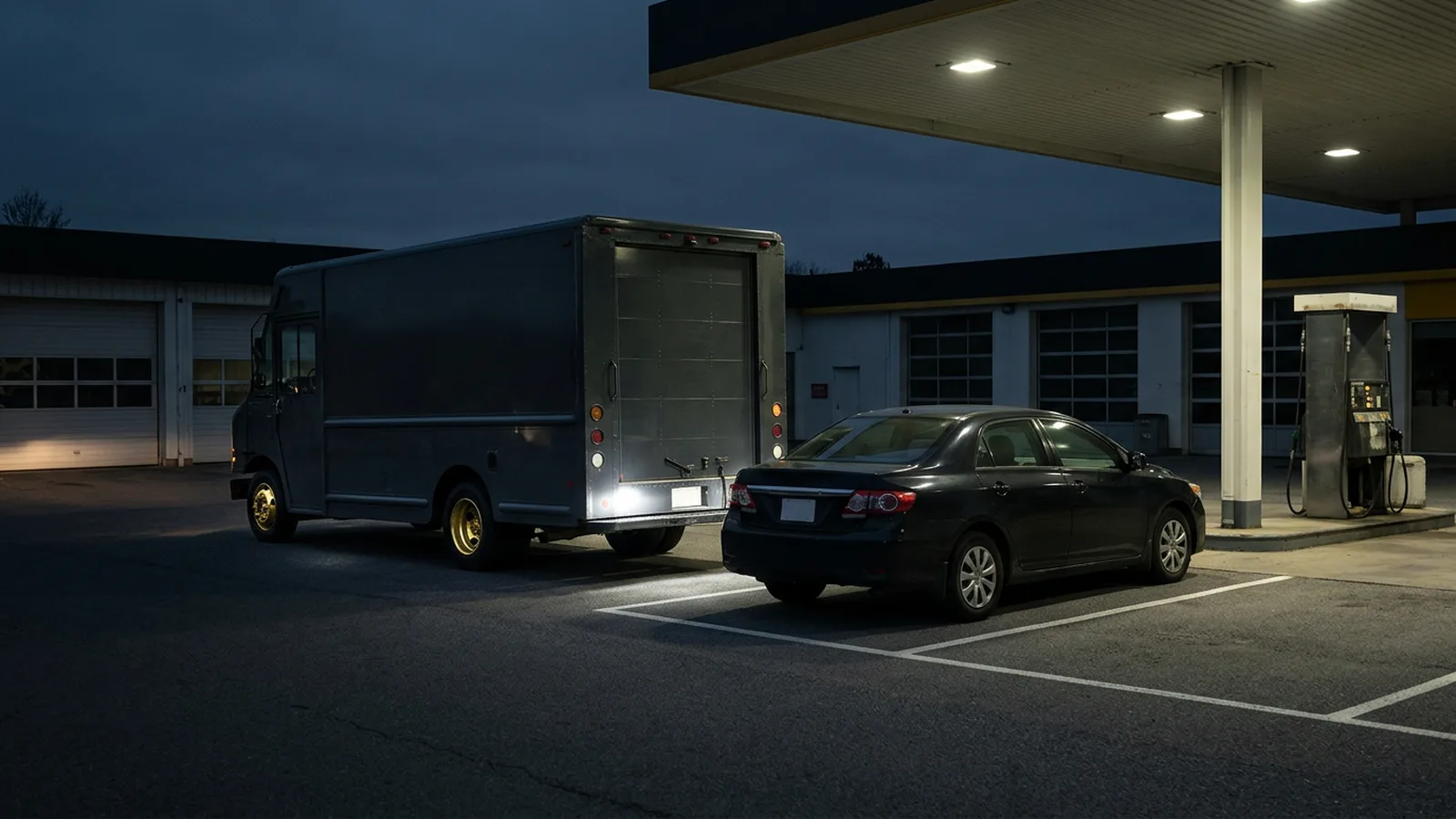
Another case started in a gas station parking lot. Our client had pulled into the lot behind a commercial vehicle, which started backing up without paying attention and backed into our client. Our client had significant injuries and sought medical treatment.
The commercial vehicle's insurance company denied liability. It said our client had pulled in behind the truck while the truck was already in motion. Another law firm had turned the case down. A prior client referred our client to us, and we said, "We believe your story." We litigated the case and settled it for just shy of seven figures.
Why a weak report does not decide these cases
A crash report does not decide these cases. It may drive the carrier's early valuation, but it does not bind a jury. Strong independent witnesses can override an officer's contributing factor codes. Surveillance and dashcam footage can contradict the report's narrative. Accident reconstructionists can show that a narrative is physically impossible.
When liability is disputed, it generally pushes a case toward trial. In Florida, a jury will allocate fault to the parties involved in a crash. Clear evidence pushes a case toward settlement.
Why some firms will not take these cases
Many law firms do not know how to litigate a case, cannot afford to, or do not want to. They accept whatever the insurance company says. We love to litigate. That is how a denied-liability case gets turned around, and our case results are where you can see more of what the firm has done.
Common Questions
- What if the insurance company says the crash was my fault?
- That does not end the claim. In disputed-liability cases, we investigate, gather evidence, and are prepared to litigate. Another firm turning a case down does not mean there is no case. We have turned denied-liability cases around by finding the truth of how the crash happened.
- How do you prove the other driver was at fault?
- You gather the statements of the parties, take depositions, and look at the points of impact on the vehicles and where the crash happened. Video, independent witnesses, and reconstruction help. In one case, the opposing side's independent witness never showed up to be deposed.
- Can a strong case beat a bad police report?
- Yes. A crash report does not bind a jury. Strong independent witnesses can override an officer's contributing factor codes, and surveillance footage or reconstruction can contradict the report's narrative. Cases are decided on admissible evidence.
- Does a disputed liability case go to trial?
- Disputed liability generally pushes a case toward trial, while clear evidence pushes it toward settlement. Many cases still resolve before the trial date, which is why we prepare every case for trial from the start.
Chapter Reflection
Both of these clients were being blamed for a crash by an insurance company. What changed the outcome was not a clever argument. It was a lawyer who believed the client's account and then did the work of proving it.