
When fault is argued or the injuries are severe, a case moves from what people remember to what the physics and the medicine show.
This chapter covers the experts we use, how reconstruction works, what a damaged vehicle can tell us, and what a traffic citation is worth.
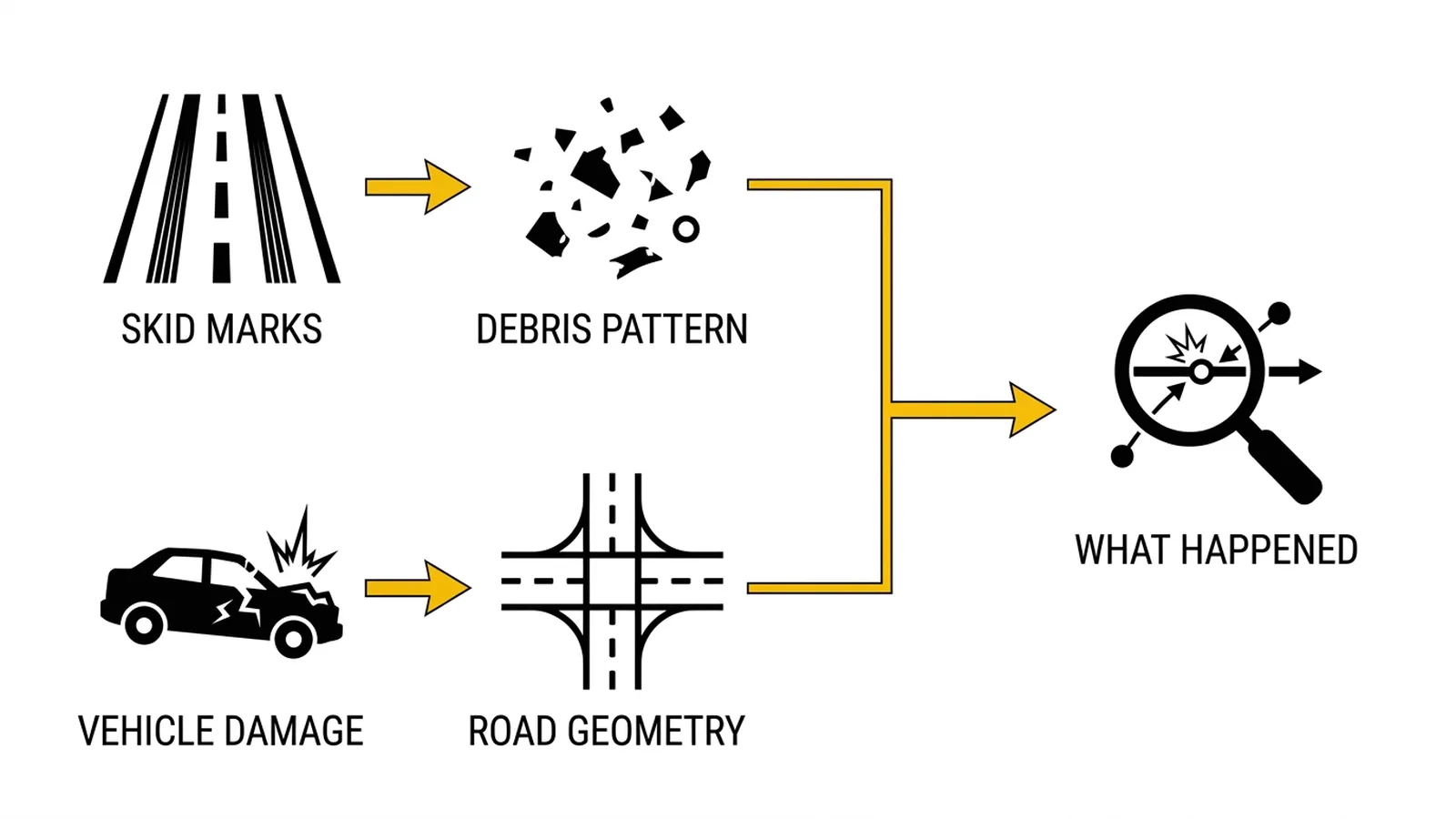
Accident reconstruction experts reconstruct the crash from physical evidence, including skid marks, debris pattern, vehicle damage, and roadway geometry. The crash dynamics quantify closing speed, the point of impact, angle of collision, and impact trajectory.
The experts in a car accident case
Florida courts currently use the Daubert standard for expert testimony. Florida's expert witness rule, section 90.702, adopted it through the Evidence Code. There is a three-part test. The expert's testimony must rest on sufficient facts or data, be the product of reliable principles and methods, and apply those methods reliably to the facts.
The categories we use most are accident reconstruction experts, biomechanical engineers, treating physicians, neuropsychologists, vocational rehabilitation experts, and life care planners.
An expert has to be prepared to defend the methodology against cross-examination. The defense will challenge the treating physician, bring a counter-expert, and commonly send our client to a compulsory medical exam. Medical experts who give an opinion on permanent impairment commonly use the AMA guides.
How reconstruction works
A reconstructionist works from the physical evidence: skid marks, the debris pattern, the vehicle damage, and the roadway geometry. The crash dynamics quantify closing speed, the point of impact, the angle of collision, and where the vehicles went afterward.
Modern reconstruction uses 3D modeling and FARO scanner data, which can be admissible in some circumstances under the Florida Evidence Code. In an I-95 commercial truck case, reconstructionists may pull data from NHTSA and from electronic logging devices to corroborate the reconstruction.
When an expert reconstructs the accident, the expert anchors the at-fault driver's negligence in the physics of the crash, not in the crash report's contributing factor codes.
A biomechanical engineer then ties the crash forces to the specific injuries sustained, which answers the defense argument that the crash was too minor to hurt anyone.
What the damaged vehicle tells you
We inspect a damaged vehicle using crush analysis, which quantifies the energy transfer in the crash. We also match the damage pattern to the mechanism, such as a rear-end, T-bone, or head-on crash. Detailed repair estimates support the property damage claim.
When a vehicle is a total loss, the actual cash value and a diminished value claim may both be available. Photograph all damage before repair, and preserve those photographs before any repair work begins.
What a citation is worth
A traffic citation issued at the scene can carry weight with the insurance company before a lawsuit is filed. At trial, it is different. Florida law keeps the citation itself out of evidence in a civil trial, so what matters are the facts behind it: what the officer saw at the scene, what witnesses saw, and any admission the at-fault driver made to someone other than the officer for the crash report. The common categories are speeding, running a red light, failure to yield, following too closely, and driving under the influence. A DUI charge could potentially open the door to punitive damages in Florida for gross negligence.
Trucks and the federal rules
Commercial vehicles follow federal guidelines and may carry several layers of coverage, as Chapter 4 explained. The firm's Stuart truck accident page is where the firm describes its truck accident practice.
Common Questions
- When does a car accident case need an expert witness?
- Typically when a case is headed to trial and who is at fault is disputed. Accident reconstruction experts, biomechanical engineers, treating physicians, neuropsychologists, vocational rehabilitation experts, and life care planners are the ones we use most. Which ones a case needs depends on the dispute.
- What is accident reconstruction?
- It is rebuilding the crash from physical evidence: skid marks, debris patterns, vehicle damage, and roadway geometry. The expert works out closing speed, point of impact, and angle of collision, and grounds the at-fault driver's negligence in the physics instead of the crash report's codes.
- Does a traffic ticket prove the other driver was at fault?
- It can help before a lawsuit, because adjusters weigh it when they evaluate fault. At trial, Florida law keeps the citation itself out of evidence, so the case rests on the officer’s observations, witness testimony, any admission by the at-fault driver to someone other than the officer for the crash report, and the physical evidence.
- Should I photograph my car before it is repaired?
- Yes. Photograph all damage and preserve those photographs before any repair work begins. The photographs show the full extent of the damage after the car has been fixed, and they support both the property damage claim and the reconstruction.
Chapter Reflection
An expert does not change what happened. An expert makes what happened visible to twelve people who were not there. The earlier the evidence is preserved, the more the expert has to work with.