
Not every crash hurts the body the same way. A rear-end collision, a T-bone, and a head-on impact each throw a person's body differently, and the injuries that follow are different too. The claim follows the injury.
This chapter walks through the common crash types I see in Florida, the injuries that go with them, and a doctrine that protects people who were already hurt.
We do have the eggshell plaintiff doctrine in Florida, which basically says that you find a plaintiff as they come. A lot of times our clients have preexisting injuries that now have been aggravated by the crash that they're in. They are entitled to make a claim for the aggravation of their preexisting injury.
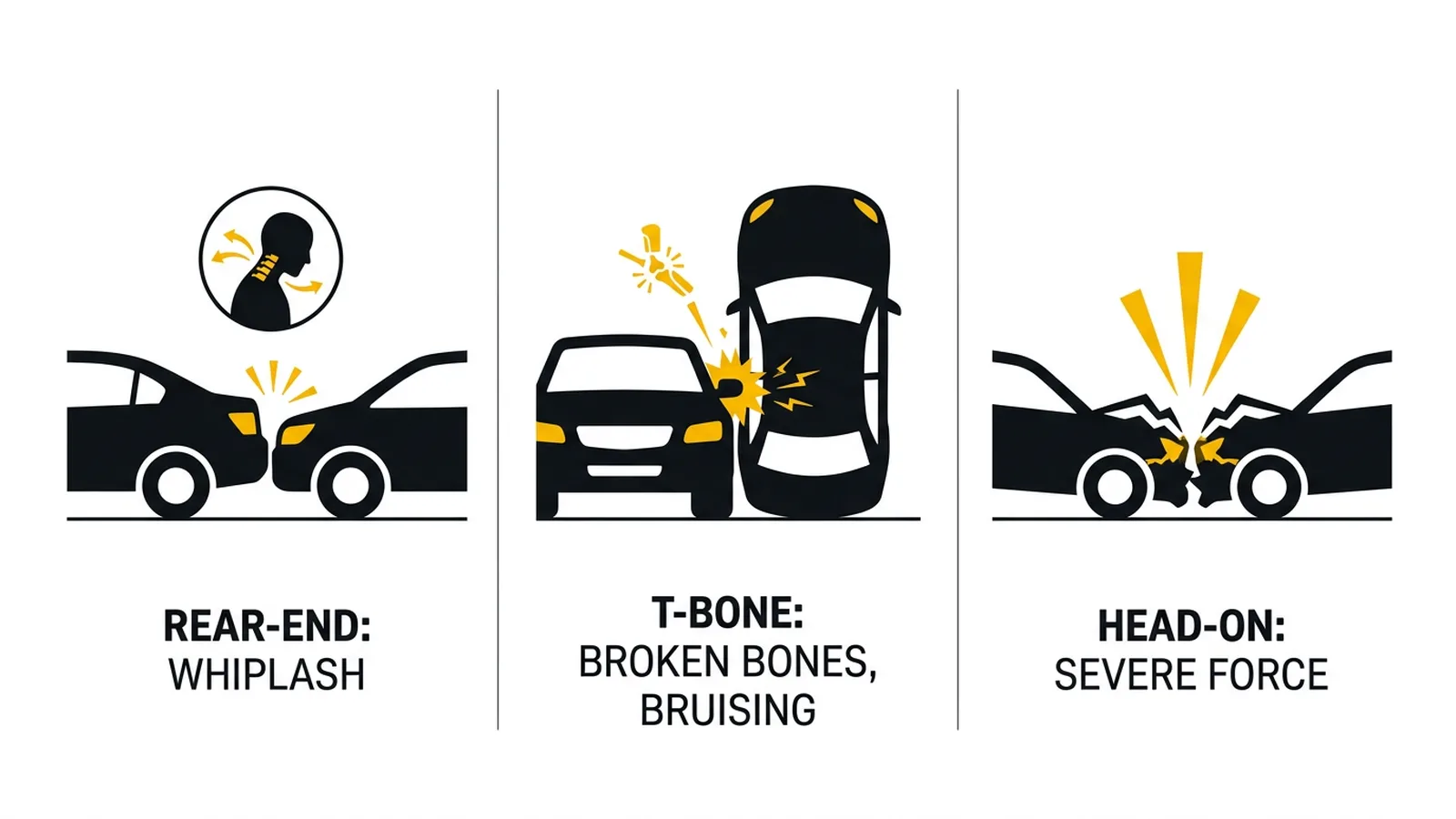
Rear-end crashes
Rear-end accidents are probably the most common, because nobody is paying attention these days when they drive. People have a phone in their hand. They may be texting, talking, or changing the radio, and then they rear-end the car in front of them.
We see a lot of whiplash-type injuries in rear-end crashes. The momentum and inertia throw a person's body forward and whip the head backward and then forward. That can cause herniations in the discs of the cervical spine and the lumbar spine. Whether you were properly restrained with a seatbelt changes the picture as well.
T-bone crashes
In a T-bone crash, you can be completely strapped in, driving straight down the road, when somebody runs into the side of you. The blunt force lands on your arm and your side. You can break bones, have significant bruising, and suffer internal injuries.
Head-on crashes
A head-on crash on an interstate, where a vehicle comes across the median, is a different level of force. The impact alone can cause severe or fatal internal injuries. Seatbelt placement matters here too, because a lap belt over the belly or around the hips can cause different bruising and internal injuries.
Low impact does not mean low injury
People say, "How could somebody get injured in a low-impact accident?" We often see people suffer significant injuries in low-impact crashes. It depends on the force of the crash and on the person who was hit, and on how that person's body reacts to the impact.
The eggshell plaintiff
Some clients arrive with an old injury. Maybe it is their back that was already bothering them. If the crash aggravates it, they are entitled to make a claim for the aggravation. The doctrine says you take the plaintiff as you find them.
The insurance company will go looking for that old injury, and Chapter 9 explains how. This doctrine is what keeps it from ending a claim by itself. The firm's Gainesville car accident team handles these claims for clients in North Central Florida.
The injuries I see most often
The most common injuries are to the cervical and lumbar spine, which is your neck and your back. People get herniated discs that press on nerves. That can cause numbness and tingling, and in the worst cases, paralysis. Sometimes you see extremity injuries, injuries from seatbelts, and injuries from airbags deploying.
I am not a doctor, so I do not diagnose. The range runs from very few and minor injuries, depending on force and impact, all the way up to paralysis and even death. That is why medical treatment matters, and it is the subject of Chapter 8.
Florida law limits damages for pain and suffering, mental anguish, and inconvenience in a claim against the at-fault driver. To recover them, the injury must be a significant and permanent loss of an important bodily function, a permanent injury within a reasonable degree of medical probability (other than scarring or disfigurement), significant and permanent scarring or disfigurement, or death. Whether your injury meets that threshold is a question for your doctors and your attorney.
Common Questions
- Can you get seriously hurt in a low-impact car accident?
- Yes. We often see people get significant injuries in low-impact accidents. How badly someone is hurt depends on the force of the crash and on how that person's body reacts to the impact, including any injury they had before. Do not assume a small crash means a small injury.
- What injuries are common in a rear-end collision?
- Whiplash-type injuries. The momentum throws your body forward and whips your head backward and then forward, which can cause herniated discs in the neck and the lower back. Whether you were wearing a seatbelt and how it sat on your body can change the injuries.
- What is the eggshell plaintiff doctrine?
- It is a Florida doctrine that says a plaintiff is taken as they are found. If you had an injury before the crash and the crash made it worse, you are entitled to make a claim for the aggravation of that preexisting injury.
Chapter Reflection
A crash is a physics problem before it is a legal one. How the vehicles met decides how a body moved, and how a body moved decides what a doctor finds. A claim that starts from the real mechanics of the crash is harder for an insurance company to talk down.